Oil and Gas

Technology that enhances the precision of your projects.

Discover advanced solutions for data generation, products, and analysis applied to GIS. Planning and managing the needs of the Architecture and Civil Construction sector.

Optimizing the Life Cycle of Oil and Gas Assets

The Future of Asset Management - Precision and Intelligence for the Oil and Gas Sector

A tDigital transformation in the Oil and Gas industry requires solutions that optimize performance, ensure safety, and guarantee regulatory compliance at all stages of the asset lifecycle.


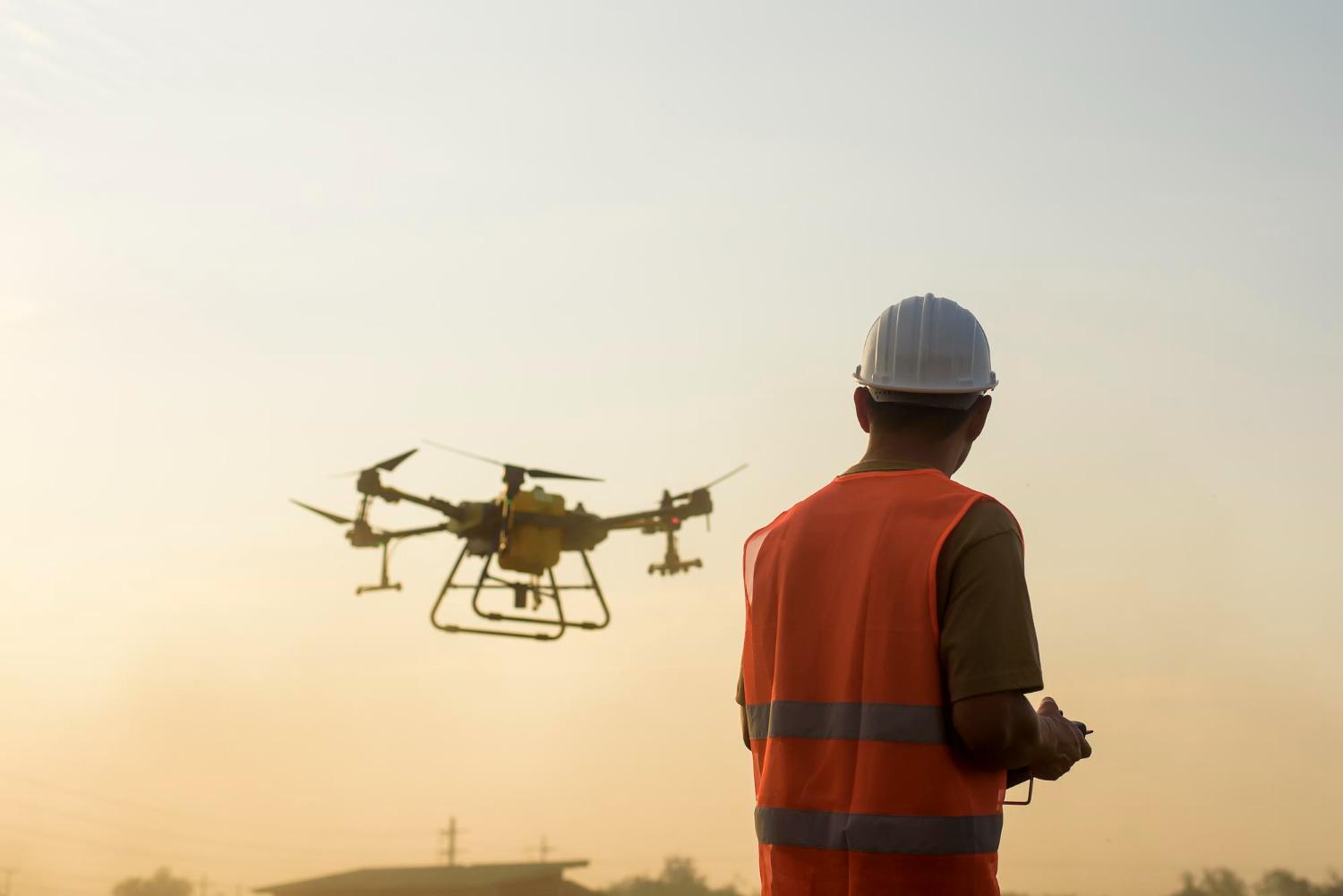
The strategic fusion of Unmanned Aerial Vehicles equipped with onboard sensorsstate-of-the-art, advanced Geotechnologies and Artificial Intelligence — provides predictive, proactive, and highly accurate asset management.


Our approach revolutionizes the inspection of your industrial assets, offering accurate and reliable data. for more assertive decision-making, from exploration to decommissioning.


Key Services and Applications: Revolutionizing Asset Management in Oil and Gas

Our professional services, performed by a qualified team, are designed to ensure maximum plant efficiency and enhanced operational safety, addressing the industry's most critical challenges.

Offshore Platforms and Units
Floating production, storage and offloading vessels (FPSOs)

Refineries, Terminals and Plants

Pipelines and Right-of-Ways

Competitive Advantages

Enhanced Security: Drastic reduction of
human exposure to hazardous environments

Safety is the fundamental pillar of Oil and Gas operations. Our solutions dramatically raise safety standards by eliminating the need for human exposure in high-risk scenarios. risk. Inspection teams no longer need to perform work at height, such as industrial climbing on flares and towers, or access confined spaces and other hostile environments.


This intelligence generates a planting plan that automatically shuts off planter sections in areas likely to be compacted, resulting in a more uniform final stand and significant savings on inputs.

Substantial Cost Reduction and
Business Continuity

Financial optimization is achieved through direct cost reduction (OPEX) and from Maximizing revenue through operational continuity.

The use of drones eliminates complex and expensive logistical costs, such as scaffolding, rope access, and helicopters. The greatest benefit is conducting inspections without halting production (shutdowns), thus preventing revenue losses.

Data Intelligence: From Collection to Management
Predictive Assets

Data is the most valuable asset in modern management. Our solution transforms massive data collection into strategic intelligence, converting raw information into actionable insights.

 
  • Accurate and Reliable Data Collection

  • Centralization and Analysis on our Online Asset Management Platform

  • Applied Artificial Intelligence (AI)

  • Predictive Decision Making

Competitive Advantages

Our drones, equipped with a strategic combination of sensors, allow the Oil and Gas industry to optimize its inspection operations, resulting in a safer, cleaner, and more efficient sector.

High-Resolution (RGB) Visual Sensors

Our RGB sensors High-resolution cameras with powerful optical zoom are the basis of most drone inspections. They allow the capture of detailed images and videos of structural components, such as flares, towers, storage tanks, pipelines, and other components.The analysis of these images enables the identification of surface defects such as corrosion, cracks, leaks, and coating damage, often in locations that are difficult for human inspection teams to access.

Thermographic Sensors

Thermal imaging cameras are essential for detecting temperature anomalies that are invisible to the naked eye. In the oil and gas industry, these sensors are crucial for:

 
  • Gas Leak Detection;

  • Inspection of Electrical and Mechanical Equipment;

  • Monitoring of Storage Tanks;

  • Inspection of Furnaces, Boilers and Refractories;

  • Safety and Fire Prevention;

  • Pipeline Integrity.

LiDAR SENSORS (Light Detection and Ranging)

By employing laser pulses to create extremely precise three-dimensional (3D) models of facilities and terrain, LiDAR sensors offer an unprecedented level of detail and data analysis, optimizing everything from project planning to leak detection and ensuring structural integrity.

 
  • 3D Mapping and Digital Twin Creation;

  • Pipeline Inspection and Integrity;

  • Monitoring of Structural Deformations;

  • Risk Analysis and Emergency Response Planning.

Gas Detectors

This technology allows for the remote and rapid detection of hazardous gas leaks and fugitive emissions in dangerous locations.and difficult to access or high-risk environments for human teams, such as offshore platforms, refineries, pipelines, and storage tanks, drastically reducing workers' exposure to hazardous environments. Its main applications are:

 
  • Pipeline Inspection;

  • Monitoring of Storage Tanks;

  • Inspection of Platforms and Refineries;

  • Emergency Response;

  • Environmental Monitoring.

Competitive Advantages

Cutting-edge technology for harsh environments.

Traditionally, inspecting these environments requires halting production, erecting scaffolding, and exposing workers to potentially toxic atmospheres, oxygen deficiency, or explosion hazards.


The use of drones Equipped with advanced sensors and maneuverability, they eliminate or drastically reduce the need for these procedures, resulting in significant gains in safety, time, and financial resources.

ENHANCED SAFETY

The main advantage is the drastic reduction.
of human exposure to environments
dangerous, in full compliance with
precepts of Regulatory Standard 33
(NR-33), which establishes the requirements for
Working in confined spaces.

Cost and Time Reduction

Eliminating the need for
scaffolding assembly, the reduction of
production downtime and
Optimizing the workforce results in
a substantial saving.


Access to Inaccessible Locations

Drones can reach points of
difficult access for human inspectors,
ensuring more comprehensive coverage
of the structure.